Quick Picks
| Product | Why it fits this problem |
|---|
Disclosure: We earn a small commission from qualifying Amazon purchases at no extra cost to you.
Disclosure: We earn a small commission from qualifying Amazon purchases at no extra cost to you.
As an Amazon Associate, we earn from qualifying purchases.Last Updated: September 2026
Here's the short version. Stainless steel turns blue, gold or rainbow because heat thickens the invisible chromium oxide layer that sits on the metal, and light interfering through that thicker film reads to your eye as color. Brown patches are usually polymerized oil and scorched food residue bonded to the surface, not damaged metal. Chalky white spots are mineral deposits — hard-water solids and undissolved salt — left behind when water boils away.
None of the three is rust. None of them is a coating failing. All three come off with mild acid, a non-scratch abrasive, and a little patience.
| Cuisinart 1.5 Quart Sauce Pan with Cover | The listing describes measurement markings, drip free pouring and a flavor lock lid on this saucepan. | Check Price on Amazon |
|---|---|---|
| Cuisinart 8-Inch Open Skillet | The listing describes an aluminum encapsulated base that heats quickly and spreads heat evenly, eliminating hot spots. | Check Price on Amazon |
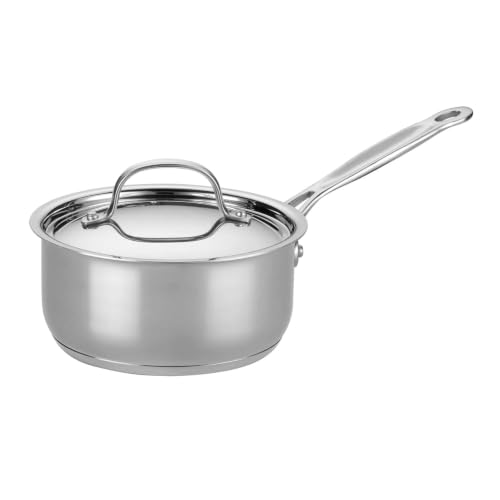
- CONFIDENCE IN EVERYDAY COOKING — Cuisinart stainless steel is built for everyday cooks upgrading from worn cookware. This stainless steel pot delivers dependable performance with
- EVEN HEAT AND MIRROR FINISH — A pure aluminum encapsulated base heats quickly and spreads heat evenly. The mirror-finish stainless cooking surface does not react with food or
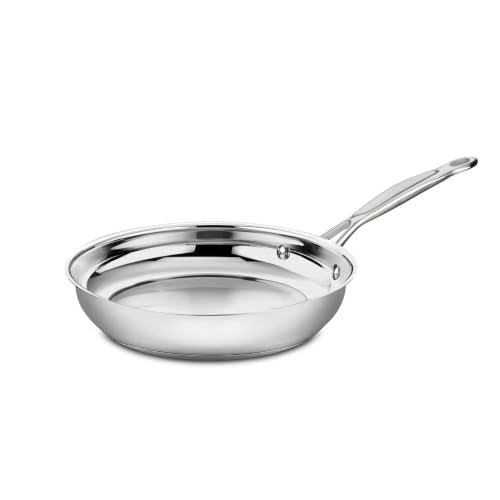
- CONFIDENCE IN EVERYDAY COOKING — The proven Cuisinart stainless cookware delivers dependable performance for everyday cooks. Built with a mirror-finish stainless steel body, this
- EVEN HEAT AND MIRROR FINISH — A pure aluminum encapsulated base heats quickly and spreads heat evenly across the bottom, helping eliminate hot spots. The mirror-finish stainless
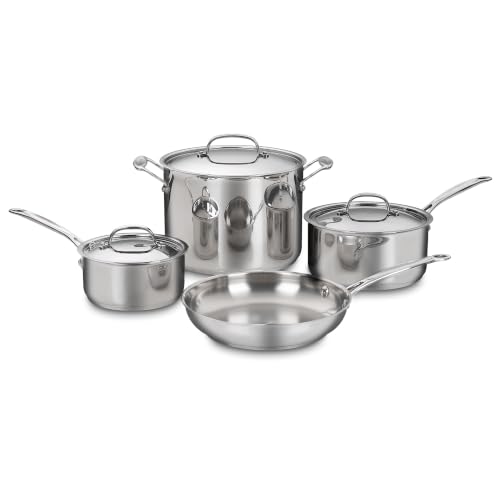
- CONFIDENCE IN EVERYDAY COOKING — Cuisinart Chef's Classic cookware delivers dependable pans for everyday cooks upgrading from worn cookware. This stainless steel pots and pans set
- EVEN HEAT DISTRIBUTION — A pure aluminum encapsulated base heats quickly and spreads heat evenly across the bottom, helping eliminate hot spots for more precise cooking. The
The Problem: Three Stains, Three Different Causes
People lump every stainless discoloration together and then attack all of it with the same scouring pad. That's why the marks keep coming back.
Blue and rainbow: heat tint
Heat tint is an oxide film, not a stain sitting on top of the steel. Empty-pan preheating, a burner ring wider than the pan base, and long dry heat all push the film thicker. Thicker film, different interference color — straw, then bronze, then blue and purple. It is cosmetic, and the pan is still perfectly safe to cook in.
Brown: cooked-on oil, not tint
Brown or amber haze that feels slightly tacky is polymerized fat. Oil heated past its smoke point cross-links into a varnish-like layer. Acid alone barely touches it — it needs degreasing plus abrasion.
White spots: minerals
Chalky white flecks in the bottom of a pot are the classic hard-water signature. Salt added to water before it comes to a boil can also pit into the surface if it sits undissolved on hot metal, so add salt after the boil starts.
Step-by-Step Solution
Removing heat tint and rainbow stains
- Let the pan cool completely. Acid on hot steel flashes off and can etch.
- Wash and dry normally so you're working on bare metal, not on grease.
- Pour white vinegar over the tinted area — enough to cover it — and leave it for several minutes.
- Wipe with a soft cloth, following the grain of the finish. Most tint lifts here.
- For stubborn film, make a paste with a stainless-safe powdered cleanser such as Bar Keepers Friend, work it with a damp non-scratch pad, then rinse thoroughly. The oxalic acid in that class of cleanser is what does the work.
- Rinse well and dry immediately. Water left standing is what starts the next round of spotting.
Removing brown polymerized residue
- Simmer water with a squirt of dish soap in the pan for a few minutes to soften the varnish.
- Deglaze while warm with a wooden or nylon tool.
- Follow with the cleanser paste step above for anything that survives.
Removing chalky white spots
- Fill the pot with a mix of water and white vinegar, enough to cover the spots.
- Bring it to a simmer, then switch the heat off and let it stand until cool.
- Wash, rinse and towel-dry rather than air-drying.
Tools and Products You'll Need
You need a mild acid, a non-scratch pad, a soft towel, and — honestly — cookware whose finish you can actually restore. Encapsulated-base stainless is forgiving here because there's no coating to strip.
> Recommended Products > > - Cuisinart 7-Piece Stainless Steel Pots and Pans Set — replacing a mixed set of coated pans in one go > - Cuisinart 1.5 Quart Sauce Pan with Cover — small-batch sauces and reheating > - Cuisinart 8-Inch Open Skillet — the high-heat pan where tint shows up first
Cuisinart 7-Piece Stainless Steel Pots and Pans Set — Best for replacing a whole mismatched kitchen at once
It also describes an aluminum encapsulated base that heats quickly and spreads heat evenly, eliminating hot spots — which matters for tint, because uneven base heating is exactly what produces a blue ring where the burner sits.
One thing to read carefully: the listing bullet claims the stainless steel cooking surface does not discolor, react with food or alter flavors. Read in context, that bullet is about food reactivity and staining from ingredients. It is not a statement that heat tint will never appear, and the listing does not address heat tint at all.
Strengths: covers saucepan, stockpot and skillet duties in one purchase; listing states dishwasher safe cleanup; listing states a limited-lifetime warranty and that the product is BPA free; the title lists compatibility with induction, electric and gas cooktops and describes it as oven safe.
Limitations: the base is described as encapsulated, meaning the aluminum sits in the base rather than running up the walls — reasonable to expect the tall stockpot walls to be heated mainly by their contents. The listing's mirror finish also shows tint more obviously than a brushed surface would.
Cuisinart 1.5 Quart Sauce Pan with Cover — Best for small-batch cooking where scorching starts
This one is a single pan rather than a set, and the listing describes measurement markings, drip free pouring and a flavor lock lid. The listing also describes cool grip handles as solid stainless steel riveted handles that stay cool on the stove top.
A note worth flagging before you buy: one of the supplied listing bullets for this saucepan ends with a reference to Quantanium Non-Stick, which sits oddly against a product described elsewhere in the same listing as a stainless steel cooking surface. Check the current listing detail page before assuming which surface you're getting.
Strengths: listing states an aluminum encapsulated base for quick, even heat; listing states dishwasher safe cleanup, a lifetime warranty, and that the product is BPA free.
Limitations: at 1.5 quarts it is a small-format pan, so it is a supplement to a larger pot rather than a replacement for one.
Cuisinart 8-Inch Open Skillet — Best for the high-heat pan that tints first
Skillets take the worst of it, because searing is where dry heat and empty-pan preheating happen. The listing for this skillet states that the stainless steel cooking surface does not discolor, react with food or alter flavors, and describes solid stainless steel riveted cool grip handles.
Strengths: listing states an aluminum encapsulated base that heats quickly and spreads heat evenly; listing states dishwasher safe cleanup, a lifetime warranty and BPA free construction; the title lists induction, electric and gas cooktop compatibility.
Limitations: it is an open skillet, so no lid is listed with it. The supplied listing information does not state pan depth, weight or oven temperature limit.
Tips for Best Results
- Match burner size to pan base. A flame licking up the sides is the fastest route to a blue halo.
- Preheat with a film of oil or with the food already in, not bone dry.
- Dry by hand. Dishwasher-safe does not mean spot-free — evaporated hard water is where white flecks come from.
- Polish along the finish direction so any micro-scratching disappears into the grain.
Common Mistakes to Avoid
- Steel wool. It scratches the passive layer and gives future stains somewhere to grip.
- Chlorine bleach on stainless. Chlorides are the classic pitting trigger.
- Salting cold water. Wait for the boil.
- Assuming tint means the pan is ruined. It is an oxide film, and it comes off.
How We Research
This website does not run a kitchen lab. For this page, the research consisted of reading the Amazon Creators API verified product records and the product listing feature bullets for each ASIN named above, retrieved 6 September 2026, and comparing what each listing does and does not state. Where a specification is absent, it is called absent rather than guessed at.
Final Verdict
If your current pans are coated and flaking, the Cuisinart 7-Piece Stainless Steel Pots and Pans Set is the pick that changes the most at once, because the listing states it covers 1.5-quart, 3-quart, 8-quart and 10-inch pieces in a single purchase. If you only need to replace the one pan that scorches, buy the piece that matches the job rather than the set. And either way: heat tint is not a reason to replace anything. Vinegar first, oxalic-acid cleanser second, and the pan looks new again.
Frequently Asked Questions
Why does my stainless pan turn rainbow only in a ring? That ring maps your burner. Where the flame or element concentrates heat, the oxide film thickens fastest, so the interference color appears there first.
Will vinegar damage stainless steel? Short contact with white vinegar on a cool pan is the standard household approach for heat tint and mineral scale. Don't leave acid sitting in the pan for hours or apply it to a hot surface.
What causes white spots in a stainless steel pot? Mineral deposits from hard water and salt added before the water boils. They are deposits sitting on the surface, not damage to it, and a simmer of vinegar and water lifts them.
Do brown stains mean I burned the pan? Usually it means oil went past its smoke point and polymerized into a varnish. Soften it with a soapy simmer first, then use a stainless-safe cleanser paste.
Can I put these pans in the dishwasher? The listings for all three Cuisinart products above state dishwasher safe cleanup. Hand-drying afterwards is still the better habit if you have hard water.
Does a mirror finish stain more than a brushed one? Not more, but more visibly. A mirror surface reflects uniformly, so an uneven oxide film reads as obvious color; brushed grain scatters it.
Related Resources
- How to season and maintain induction-compatible cookware
- Choosing between clad and encapsulated-base stainless
- U.S. Consumer Product Safety Commission — cpsc.gov for cookware recall notices
- USA.gov — consumer protection guidance
Sources & Methodology
Nobody at this website cooked in, scrubbed, or laboratory-tested any of the pans named here — there was no physical testing of any kind. What informed this page was a close reading of each product's Amazon Creators API verified product record and its published listing feature bullets, retrieved 6 September 2026, with particular attention to what those bullets claim about the cooking surface versus what they leave unaddressed. For discoloration specifically, that evidence tells you how each pan is built and warranted, but it does not measure how any of them behave under sustained dry heat, so treat the cleanup method above as the durable part of this guide and the product notes as a description of what the manufacturer publishes.