As an Amazon Associate this site earns from qualifying purchases.
Quick Picks
| Product | Best for | Published spec that matters here |
|---|---|---|
| Cuisinart 8-Inch Open Skillet | Eggs, single portions, small induction rings | Aluminum encapsulated base; induction, electric and gas compatible |
| Cuisinart 7-Piece Stainless Steel Pots and Pans Set | Building a full induction-ready kit at once | Includes a 10-inch skillet plus three covered pots |
| Cuisinart 1.5 Quart Sauce Pan with Cover | Sauces, reductions, small-batch grains | Flavor lock lid, measurement markings, riveted cool grip handles |
Disclosure: We earn a small commission from qualifying Amazon purchases at no extra cost to you.
Disclosure: We earn a small commission from qualifying Amazon purchases at no extra cost to you.
As an Amazon Associate we earn from qualifying purchases. This page contains affiliate links, and we may receive a commission if you buy through them — at no extra cost to you.
As an Amazon Associate, we earn from qualifying purchases.
Last Updated: September 2026
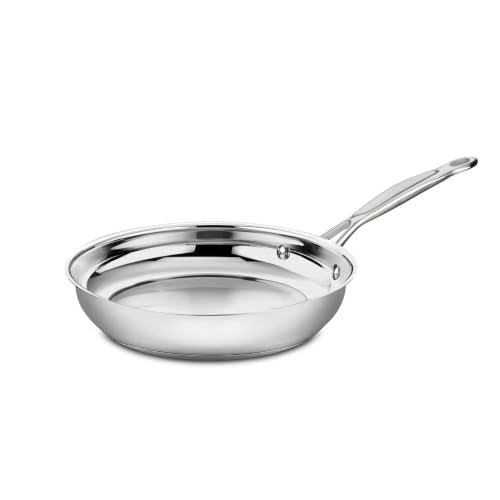
- CONFIDENCE IN EVERYDAY COOKING — The proven Cuisinart stainless cookware delivers dependable performance for everyday cooks. Built with a mirror-finish stainless steel body, this
- EVEN HEAT AND MIRROR FINISH — A pure aluminum encapsulated base heats quickly and spreads heat evenly across the bottom, helping eliminate hot spots. The mirror-finish stainless
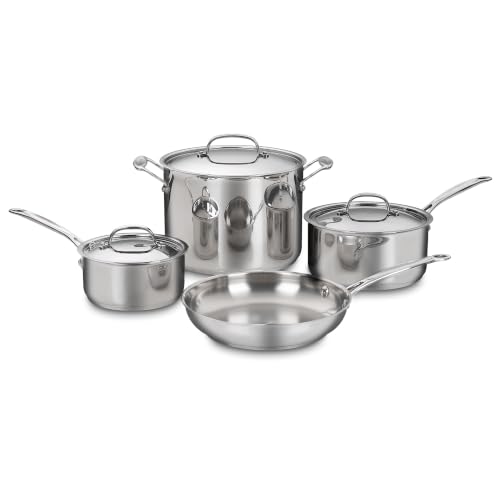
- CONFIDENCE IN EVERYDAY COOKING — Cuisinart Chef's Classic cookware delivers dependable pans for everyday cooks upgrading from worn cookware. This stainless steel pots and pans set
- EVEN HEAT DISTRIBUTION — A pure aluminum encapsulated base heats quickly and spreads heat evenly across the bottom, helping eliminate hot spots for more precise cooking. The
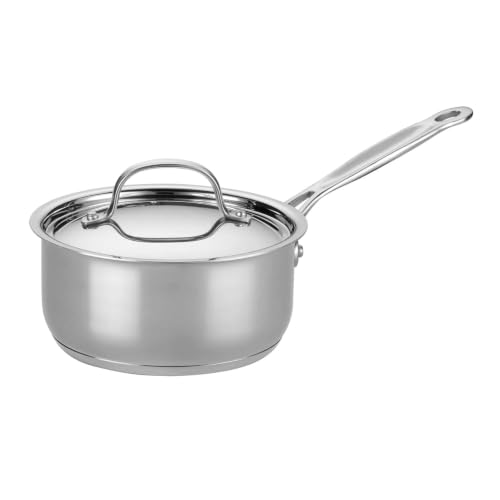
- CONFIDENCE IN EVERYDAY COOKING — Cuisinart stainless steel is built for everyday cooks upgrading from worn cookware. This stainless steel pot delivers dependable performance with
- EVEN HEAT AND MIRROR FINISH — A pure aluminum encapsulated base heats quickly and spreads heat evenly. The mirror-finish stainless cooking surface does not react with food or
The Short Answer
Food sticks to stainless steel on induction for one reason more than any other: the pan is not hot enough when the food goes in, so proteins and starches bond directly to cold metal instead of searing against a vapour layer. The fix is an order of operations, not a gadget. Heat the dry pan first, confirm the temperature with the water drop test, add fat second, add food third, and then leave it alone until it releases on its own.
Induction makes this both easier and harder. Easier, because the burner responds instantly and holds a setting. Harder, because it heats the pan base so fast that most people skip the preheat entirely, dump in oil while the pan is still climbing, and watch the egg weld itself to the surface.
The Problem: Why Stainless Grabs Food
Stainless steel is not smooth. At a microscopic level it is a landscape of pores and ridges that expand as the metal heats. Put food onto a warm-but-not-hot pan and those pores are still partly open; the food's proteins settle into them and bond. Get the surface properly hot before anything touches it, and the pores have already expanded and filled with hot oil, which is what people are describing when they say a stainless pan "turns non-stick" for a few minutes.
The second half of the problem is the pan itself. If the base heats unevenly, one part of the surface passes the release temperature while another is still cold, and food sticks in a ring or a patch. That is why encapsulated-base construction matters on induction, where the magnetic field only excites the base and everything above it is heated by conduction. Cuisinart's listing for the 7-piece set says its aluminum encapsulated base heats quickly and spreads heat evenly, eliminating hot spots. That is the manufacturer's own framing, not a measurement taken here, but it describes the exact design feature the technique below depends on.
Step-by-Step: The Heat Control Method
- Start dry and empty. No oil, no butter, no food. Fat added to a cold pan sits there oxidising the whole way up to temperature and turns gummy before the pan is ready.
- Set the induction hob to a medium setting. Resist the maximum setting. Induction ramps fast enough that high power overshoots straight past the sear window and into scorched oil.
- Run the water drop test. Flick a few drops of water into the pan. If they hiss and vanish immediately, the pan is still too cool. Keep waiting.
- Watch for the mercury bead. When a drop rolls around the surface as a single intact bead instead of spitting apart, the pan has reached the Leidenfrost point, where a cushion of vapour holds the water off the metal. That bead is your green light.
- Dry the pan, then add fat. Tip the water out, wipe if needed, and add oil. It should shimmer within seconds, not sit flat.
- Add food and stop touching it. Lay proteins down away from you and leave them. A properly seared surface releases itself; if it resists the spatula, it is not ready.
- Adjust power downward after the sear. Once the crust has formed, drop the hob setting. Induction responds immediately, which is the one place it beats gas outright.
The Water Drop Test, Explained
The water drop test is a temperature check disguised as a party trick. Below the Leidenfrost point, water contacts the metal directly, boils violently and scatters. Above it, the underside of the drop flashes to steam and the drop rides that vapour layer as a rolling bead. It is the only preheat indicator that works identically on every induction hob regardless of how the manufacturer numbers its power levels.
Tools You'll Need
Cuisinart 8-Inch Open Skillet — Best for eggs and single portions
If sticking eggs are the problem you are actually trying to solve, an 8-inch skillet is the right tool, because a small pan reaches an even preheat faster and gives you a surface that matches the food rather than dwarfing it. The 8-inch skillet's bullets cover the same aluminum encapsulated base, the same non-reactive stainless cooking surface, riveted cool grip handles, dishwasher-safe cleanup and a lifetime warranty. Cuisinart describes those cool grip handles as solid stainless steel and riveted, and says they stay cool on the stove top.
One honest note on the listing copy: its listing title calls it an 8-Inch Open Skillet and, in the same breath, a Large Kitchen Pan and an Oven Safe Saucepan. Read the size, ignore the adjectives. The supplied listing information does not state a maximum oven temperature, so treat the oven-safe claim as unquantified.
Cuisinart 7-Piece Stainless Steel Pots and Pans Set — Best for outfitting an induction kitchen in one go
The set's bullet lists a 1.5-quart saucepan with cover, a 3-quart saucepan with cover, an 8-quart stockpot with cover, and a 10-inch skillet. That is one skillet and three covered pots, so if searing is your priority you are buying a lot of pot to get one pan. Cuisinart describes the stainless cooking surface as one that does not discolor, react with food or alter flavors, which is the practical argument for stainless over coated pans when you deglaze with wine or tomato.
The listing also lists measurement markings, a Cool Grip Helper Handle, drip free pouring and a Flavor Lock Lid, and calls the set dishwasher safe. The set carries what the listing calls a limited-lifetime warranty and describes the product as BPA free. Worth noticing: the two open-stock pieces here are described as carrying a lifetime warranty rather than a limited-lifetime one. The listings send you to the user manual for the actual policy in both cases, so read it before assuming the wording means much.
Cuisinart 1.5 Quart Sauce Pan with Cover — Best for sauces alongside the sear
This one is not a searing pan, and pretending otherwise would be silly. It earns a place in this article because the pan sauce you build from the fond is half the reason to cook on stainless in the first place. Cuisinart's bullets for this saucepan list measurement markings, drip free pouring and a flavor lock lid, and call it dishwasher safe under a lifetime warranty. The 1.5-quart saucepan listing also describes solid stainless steel riveted cool grip handles that stay cool on the stove top.
Read the listing carefully before you buy, though. That same listing's warranty bullet ends with the phrase "Quantanium Non-Stick for Professional Results", which sits oddly beside the stainless steel cooking surface described one bullet earlier. The two statements are not reconcilable from the listing alone, and the supplied listing information does not clarify which applies.
Recommended Products
> For the sticking problem specifically: the Cuisinart 8-Inch Open Skillet for eggs and small proteins, and the Cuisinart 7-Piece Stainless Steel Pots and Pans Set if you want the 10-inch skillet plus covered pots in a single purchase. Both listings name induction, electric and gas cooktops.
Tips for Best Results
- Bring food to room temperature first. Fridge-cold protein drops the surface temperature the instant it lands and drags the pan back below the release point.
- Pat the food dry. Surface moisture steams instead of searing, and steam is the enemy of crust.
- Don't crowd the pan. Cook in batches. Four things in an 8-inch skillet is a stew, not a sear.
- Match pan size to hob ring. Induction only heats what sits over the coil; overhang stays cold and food sticks at the rim.
- Let the fond do its job. Browned residue is flavour, not failure. Deglaze it into a sauce.
Common Mistakes to Avoid
- Adding oil to a cold pan. It polymerises into a tacky film that food grips instead of slides across.
- Cranking induction to maximum. You will pass the sear window and land in smoking oil.
- Moving the food early. Every nudge tears the crust that would have released cleanly a minute later.
- Trusting the burner display. Power level numbers are not temperature. The water bead is.
- Assuming stainless behaves like non-stick. It does not. It behaves well only when preheated.
How We Research
This website does not run a test kitchen or a lab. For this article, the product claims come from two source types only: Amazon Creators API verified product records for each ASIN, and the product listing feature bullets published on each listing, all retrieved on 6 September 2026. Each specification was checked against that product's own record before it was written down, so nothing from the 7-piece set has been carried over to the single pieces or vice versa. Where a listing is silent or self-contradictory, this article says so rather than filling the gap.
Frequently Asked Questions
What is the water drop test on a stainless steel pan? Flick a few drops of water into a dry, heating pan. Scattering and instant hissing means it is too cool. A single drop that rolls around like mercury means the pan has reached the Leidenfrost point and is ready for oil.
Does induction change the preheat technique? The technique is identical, but the timing is compressed and the power settings are not comparable between hobs. Because induction only energises the pan base, use the water bead as your indicator rather than a burner number or a clock.
Should I preheat a stainless pan empty on induction? Yes, dry and empty, on a medium setting. Adding oil first means it heats for the entire ramp-up and can turn sticky before the pan is ready.
How hot is too hot for a stainless steel pan? If oil smokes the moment it hits the surface, you have overshot. Pull the pan off the hob, let it settle, and start again with fresh oil.
Are these Cuisinart pans safe for induction hobs? The listings for the 8-inch skillet, the 1.5-quart saucepan and the 7-piece set each name induction, electric and gas cooktops in the product title. As with any pan, confirm your hob's minimum base diameter before buying small pieces.
Will a better pan fix sticking on its own? No. Technique does most of the work. An even-heating base helps by removing cold patches, which is what the encapsulated aluminum base in these listings is designed to address, but no stainless pan releases food that went in too early.
Final Verdict
Buy the technique before you buy the pan. The heat control method above costs nothing and solves the overwhelming majority of stainless sticking complaints.
If you do want cookware to go with it, the sharpest match to this specific problem is the Cuisinart 8-Inch Open Skillet: a small skillet with an aluminum encapsulated base, which is the construction most relevant to eliminating the cold patches that cause ring-shaped sticking, and it suits anyone whose actual complaint is eggs and single portions. If you are starting from an empty cupboard instead, the 7-piece set gets you a 10-inch skillet and three covered pots in one purchase, with the caveat that it is pot-heavy for a searing-focused cook. The 1.5-quart saucepan is a sauce pot, not an answer to sticking, and its listing's Quantanium non-stick line needs clarifying with Cuisinart before you assume what surface you are getting.
Related Resources
- Choosing an induction-ready cookware set
- Induction power levels explained
- How to clean burnt-on food from stainless steel
- Encapsulated base vs fully clad construction
- Consumer safety and recall information: CPSC and USA.gov consumer protection
Sources & Methodology
Nobody at this website cooked an egg in any of these pans, physically handled them, or put them through a laboratory. What was done instead: each of the three ASINs was pulled as a verified Amazon Creators API product record on 6 September 2026, and every published listing feature bullet was read line by line and compared across the three listings, which is how the limited-lifetime versus lifetime warranty wording and the stray Quantanium non-stick line in the saucepan bullets surfaced here. For cookware, that kind of specification reading tells you reliably what a pan is made of, what construction the manufacturer claims for its base, which hob types it is sold as compatible with, and where a listing contradicts itself — it cannot tell you how the surface behaves after a year of searing, and this article does not pretend otherwise.