As an Amazon Associate this site earns from qualifying purchases.
Quick Picks
| Set | Base / surface construction as published | Published heat limits | Care-relevant detail | Link |
|---|---|---|---|---|
| Cuisinart 7-Piece Stainless Steel Pots and Pans Set | Aluminum encapsulated base; stainless cooking surface | Not stated in supplied listing | Stainless surface does not discolor or react with food; limited-lifetime warranty | Check Price on Amazon |
| All-Clad HA1 Hard Anodized Nonstick Cookware Set | Heavy gauge aluminum with stainless-steel base; PTFE nonstick | Pans oven safe to 500F; glass lids to 350F | Manufacturer says to wash with soap and sponge and use silicone, nylon or wooden utensils | Check Price on Amazon |
| Circulon A1 Series Induction Pots and Pans Cookware Set | Thick, edge-to-edge steel base; ScratchDefense nonstick | Oven safe to 400F; lids to 350F | Described as warp-resistant; called truly dishwasher safe; Lifetime Limited Warranty | Check Price on Amazon |
| SENSARTE Pots and Pans Set Non stick, 14 Pcs | 4.8mm thick stainless steel pan bottom; die-cast aluminum body; ILAG nonstick | Not stated in supplied listing | Check Price on Amazon | |
| SENSARTE 20Pcs Nonstick Pots and Pans Set | Reinforced cast aluminum construction | Oven safe to 480F with handle removed | Dishwasher safe, but hand washing described as gentler on the finish; 6 pan protectors | Check Price on Amazon |
| CAROTE 22pcs Hybrid Nonstick Pots and Pans Set | Stainless steel construction; titanium-enhanced hybrid honeycomb interior | Oven safe (temperature not stated in supplied listing) | Manufacturer instructs preheating properly and cooking on low to medium heat | Check Price on Amazon |
Disclosure: We earn a small commission from qualifying Amazon purchases at no extra cost to you.
Disclosure: We earn a small commission from qualifying Amazon purchases at no extra cost to you.
As an Amazon Associate we earn from qualifying purchases. This page contains affiliate links, and we may receive a commission if you buy through them — at no extra cost to you.
As an Amazon Associate, we earn from qualifying purchases.
Last Updated: September 2026
Induction is brutal on cookware in a way gas never was. A gas flame licks up the sides of a pan and heats a wide, sloppy circle. An induction hob does the opposite: it dumps energy directly into the ferromagnetic layer inside the base, fast, in a tightly defined ring. That is why induction boils water so quickly — and also why induction is where thin pans go to warp, where nonstick coatings get cooked past their limits, and where the cooktop glass ends up scratched by the very pans that are supposed to sit on it.
Here's the thing: most "my pan warped" and "my nonstick died in eight months" stories are a mix of two causes — a base that was never built for concentrated bottom heat, and a habit (empty preheat on high, thermal shock in the sink, metal utensils) that would shorten the life of any pan. This guide teaches you to separate the two, so you buy for the failure mode you actually face.
What you'll learn: how base construction predicts warp resistance, what a coating's published oven rating tells you about its ceiling, how to preheat on induction without cooking a coating to death, how to clean glass induction cooktops without grinding grit into them, and which of the sets below match which habits. Every product fact here comes from the manufacturer's own published listing specifications, retrieved 2026-09-06 — this website does not perform hands-on or laboratory testing, and nothing below is written as if it did.
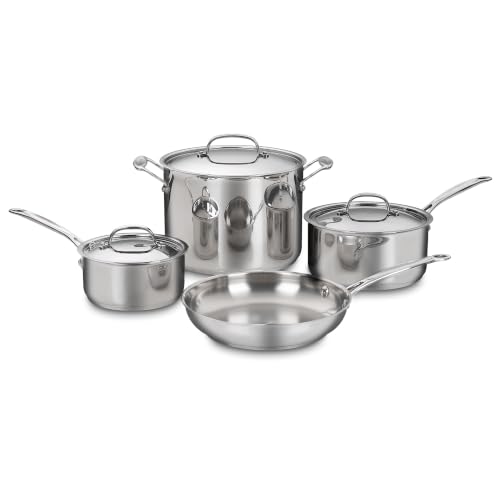
- CONFIDENCE IN EVERYDAY COOKING — Cuisinart Chef's Classic cookware delivers dependable pans for everyday cooks upgrading from worn cookware. This stainless steel pots and pans set
- EVEN HEAT DISTRIBUTION — A pure aluminum encapsulated base heats quickly and spreads heat evenly across the bottom, helping eliminate hot spots for more precise cooking. The
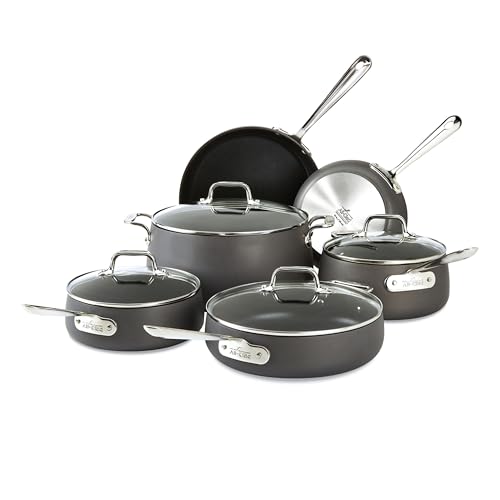
- High Quality Performance with Everyday Convenience - HA1 Nonstick heavy gauge aluminum and stainless-steel base deliver even heat for consistent, delicious cooking. The
- Design You Will Love- HA1 Nonstick has a sleek and stylish contoured design.. Our double riveted stainless steel handles ensure a secure grip and our tempered glass lids provide
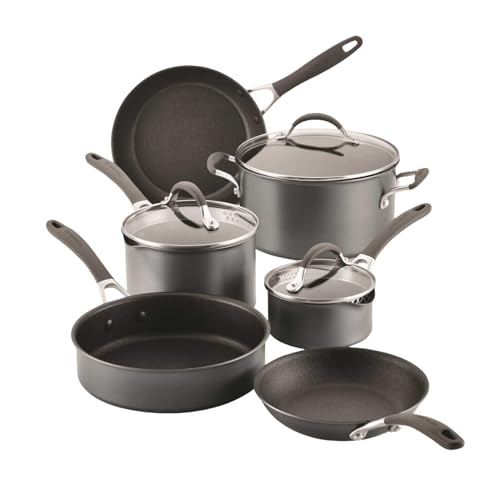
- EXTREME NONSTICK: Engineered not to scratch, our nonstick cookware set was lab-rated to last 15x longer than any prior generation of Circulon nonstick cookware and meets or
- TAKE IT TO THE EDGE: Pots and pans set non stick with a thick, edge-to-edge steel base delivers fast, even heat and enhanced, warp-resistant stability from stove to oven
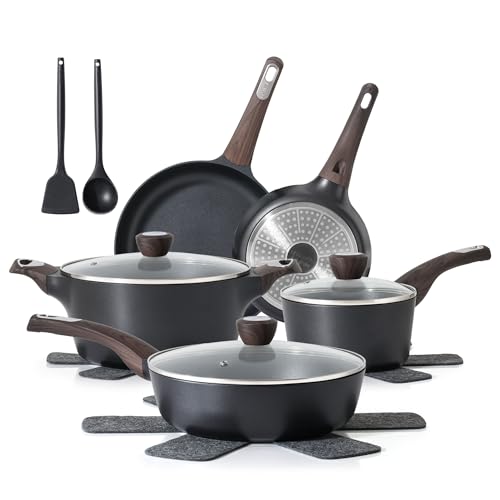
- Healthy Cookware Set - Switzerland ILAG nonstick surface, safe and non toxic, free of PFOA, PFOS, APEO lead, cadmium and other toxic substances that can leach into food
- Long Lasting - Non-stick effect lasts longer than ceramic surfaces! Scratch-resistant with excellent food release. Only less oil is needed for cooking, for a healthy, low-fat diet
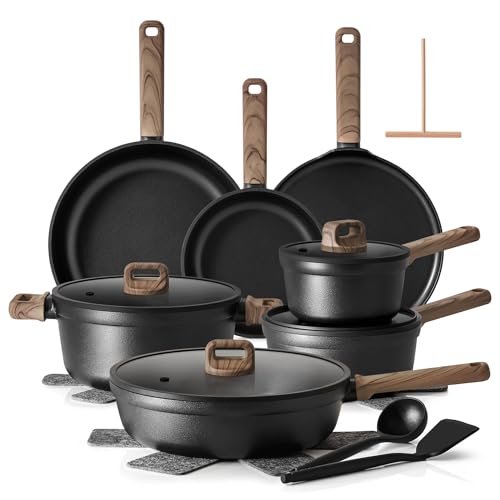
- HEALTHY NONSTICK COATING: Designed for safer cooking with nonstick coating, this pots and pans set is free of intentionally added PFOA, PFOS, lead, cadmium. Food slides off
- COMPATIBLE WITH ALL STOVETOPS: Suitable for all stovetops including gas, electric, ceramic, glass and induction. Reinforced cast aluminum construction makes this cookware set heat
Why Induction Punishes Cookware Differently
Direct answer: induction heats the pan's own base by inducing current in its ferromagnetic layer, so nearly all the heat appears in a disc at the bottom of the pan rather than spreading up the walls. That concentration creates a steep temperature difference between the center of the base and its outer edge, and steep temperature gradients are what bend metal.
A pan base is usually a sandwich — a magnetic stainless disc, a conductive aluminum core, an interior surface. Those layers expand at different rates. Heat the center hard and fast while the rim stays cool, and the disc tries to grow faster than the metal around it. Once past the metal's elastic limit, it stays bent. That is the mechanical story behind the classic induction complaint: a pan that spins, rocks, or pools oil at the edges.
Coating failure is a separate story with the same root cause. Nonstick surfaces have a temperature ceiling. On induction, an empty pan at full power reaches that ceiling faster than most cooks expect, because there is no flame lag and no slow-heating burner coil in between. Nothing in the supplied listing information gives a degradation temperature for any of these coatings — but the manufacturers do publish oven ratings that tell you where each system stops being rated, and those numbers are worth reading closely.
Types of Induction Cookware Explained
Direct answer: for induction longevity, cookware sorts into three families — bare stainless with a bonded aluminum base, hard-anodized aluminum with a PTFE-family coating, and cast or die-cast aluminum with a bonded steel bottom plate. Each fails differently, and each demands different care.
| Type | How it's built (per supplied listings) | Typical longevity risk | Example from this guide |
|---|---|---|---|
| Bare stainless, encapsulated base | Stainless cooking surface over an aluminum encapsulated base | Base separation or warping under thermal shock; sticking if underheated. No coating to lose | Cuisinart 7-Piece Stainless Steel Pots and Pans Set [S3] |
| Hard-anodized aluminum, PTFE nonstick | Heavy gauge aluminum body with a stainless-steel base; PTFE surface | Coating wear from metal utensils and abrasives; ceiling set by the published oven rating | All-Clad HA1 Hard Anodized Nonstick Cookware Set [S4] |
| Steel-based nonstick, engineered for scratch resistance | Thick, edge-to-edge steel base with a harder nonstick surface | Still a coating; still finite. Base design is the warp defense | Circulon A1 Series [S5] |
| Die-cast / cast aluminum with bonded steel plate | Cast aluminum body, stainless bottom bonded for induction | Bond integrity and coating life; thicker plates resist deformation better | SENSARTE 14 Pcs [S6] |
| Cast aluminum, induction compatible (base plate not specified) | Reinforced cast aluminum construction with a coated bottom; the supplied listing does not describe a bonded stainless or steel base plate | Coating life; base construction not published, so warp resistance cannot be assessed from the listing | SENSARTE 20Pcs [S7] |
| Hybrid nonstick over stainless | Stainless construction, titanium-enhanced honeycomb interior | Hybrid surfaces still have a wear life; manufacturer specifies low-to-medium heat | CAROTE 22pcs [S8] |
Notice what the table does not do: it does not rank these by lifespan. None of the supplied listings publish a coating-hours figure or a warp threshold, so ranking them numerically would be fiction. What the specifications do let you do is match construction to your own habits.
Key Features to Look For, Ranked by Importance
1. Base thickness and base architecture
This is the single most predictive spec for warp resistance, and it is the one most listings dodge. Two of the sets here give you something concrete.
SENSARTE publishes a 4.8mm thick stainless steel pan bottom on its 14-piece set, alongside die-cast aluminum construction, and states the set gives no warping and is durable [S6]. Read that carefully — 4.8mm is the manufacturer's own dimension for the steel bottom, and the no-warping language is the seller's claim, not an independent verification. Still, a published thickness is more useful than silence: a thicker bottom plate has more material to absorb a center-to-edge temperature gradient before it deforms.
Circulon takes the other approach and describes a thick, edge-to-edge steel base delivering fast, even heat and enhanced, warp-resistant stability from stove to oven [S5]. "Edge-to-edge" is the operative phrase. A base plate that stops short of the pan's outer diameter leaves an unsupported rim; one that runs to the edge spreads the induction field's heat over the full footprint. Circulon does not publish a thickness figure in the supplied listing, so you get the design intent without the number.
2. The published oven rating — treat it as a heat ceiling
Oven ratings are the closest thing to a published thermal limit you get on a cookware listing, and the spread across these sets is large.
All-Clad rates the HA1 pans oven safe up to 500F, with glass lids oven safe up to 350F [S4]. Circulon rates the A1 Series to 400F with lids to 350 [S5]. SENSARTE rates its 20-piece set oven safe up to 480F, and specifies removing the handle before placing it in the oven [S7].
That 100F gap between the All-Clad pans and the Circulon pans is not a quality verdict — different constructions get rated differently, and an oven rating is a soak-temperature rating, not a stovetop one. But it does tell you something practical: a pan rated to 500F has more published headroom for oven-finishing a seared protein than one rated to 400F, and if you routinely slide a skillet under a broiler, the higher figure is the one to buy toward.
The lid numbers matter more than people think. Two of these sets rate the pans well above the lids — All-Clad at 500F pans versus 350F glass lids, Circulon at 400F pans versus 350F lids [S4][S5]. Tempered glass and silicone gaskets are the weak link in an oven transfer. Take the lid off.
3. The manufacturer's own care instructions
When a brand tells you how to wash its own cookware, that is the most authoritative longevity guidance available on the listing. Compare these three:
All-Clad states the set is dishwasher safe, then adds that to preserve the nonstick you should wash it with a soap and sponge and use silicone, nylon or wooden utensils [S4]. That is a manufacturer saying, in effect, dishwasher-legal but hand-wash-preferred.
SENSARTE says its 20-piece set is dishwasher safe with all coated bottom and will not leave black stains or residue, while noting hand washing is a gentler option to help preserve the finish over time [S7]. On the 14-piece set, SENSARTE goes further and recommends hand washing outright, saying it cleans effortlessly and that you can simply wipe with a paper towel or rinse with water [S6].
Circulon is the outlier and says so loudly: the A1 Series is described as truly dishwasher safe for convenient cleanup — the dishwasher safe pots and pans set that won't sacrifice performance [S5]. That is a stronger claim than the others make, and it is Circulon's claim rather than a verified outcome. If dishwasher tolerance genuinely governs your buying decision, that is the language to weigh.
4. Coating chemistry and what each claim actually covers
Be precise here, because the marketing terms are not interchangeable.
All-Clad's HA1 uses PTFE nonstick, which the brand describes as high-quality and offering long-lasting, easy release [S4]. SENSARTE's 14-piece set uses a Switzerland ILAG nonstick surface, described as free of PFOA, PFOS, APEO, lead, cadmium and other toxic substances that can leach into food [S6]. The SENSARTE 20-piece set is described as free of intentionally added PFOA, PFOS, lead and cadmium [S7] — note the phrase "intentionally added," which is narrower than a flat absence claim. CAROTE describes its interior as a PFAS-free, titanium-enhanced hybrid nonstick with a honeycomb cooking surface [S8].
PFOA-free and PFAS-free are not the same statement. PFOA is one compound; PFAS is a class. Only the CAROTE listing among these makes the PFAS-free claim [S8], and it is the manufacturer's claim, not third-party certification. If chemistry is your deciding factor, read the exact wording rather than the headline.
5. Handles, rivets and the parts that outlive the coating
Handles are where sets quietly fail. All-Clad publishes double riveted stainless steel handles for a secure grip [S4]. Circulon uses handles made from cast stainless steel and silicone [S5]. Cuisinart publishes a Cool Grip Helper Handle [S3]. SENSARTE's 14-piece set uses an anti-scald wood-grain Bakelite handle described as ergonomically designed [S6].
The materials tell you something about oven behavior. A riveted all-stainless handle has no polymer to soften; a Bakelite or silicone-composite handle is more comfortable on the stovetop but is a different proposition in an oven. SENSARTE's 20-piece set resolves this by making the handle removable for oven use, and instructs you to remove it before placing the pan in the oven [S7].
6. Warranty language
Cuisinart publishes a limited-lifetime warranty on the stainless set and directs you to the user manual for troubleshooting and warranty policy questions [S3]. Circulon backs the A1 Series with ScratchDefense Technology with a Lifetime Limited Warranty [S5]. CAROTE states a commitment to long-term product support and asks you to contact support for quality issues under normal household use, with resolution according to warranty terms [S8]. The supplied listings for the All-Clad and both SENSARTE sets do not state a warranty length.
A lifetime warranty on stainless means something different from a lifetime warranty on a coated pan. Coating wear from normal cooking is typically outside such coverage; the supplied listings do not detail what each warranty excludes, so read the actual terms before treating one as insurance against a worn surface.
Preheating Pans on Induction Without Killing Them
Direct answer: preheat coated pans at low to medium power with fat or food already in them, and never leave an empty nonstick pan on a high induction setting. CAROTE says this outright for its own set — for best performance, preheat properly and cook with low to medium heat [S8].
Here is the mechanism. Induction delivers energy to the base almost instantly, and an empty pan has nothing to absorb it. Oil, water, or food acts as a thermal buffer, spreading the load and capping the surface temperature near the food's own cooking range. Take the buffer away and the coating sits alone at whatever temperature the hob drives it to.
Three habits that follow from this:
- Add fat before heat, not after. On induction the pan reaches temperature so quickly that the "heat the pan, then add oil" gas-stove habit skips the buffering stage entirely.
- Use the middle of the dial for coated pans. Reserve the boost settings for stainless and for boiling water in a stockpot. The Cuisinart set's stainless cooking surface, which the manufacturer says does not discolor, react with food or alter flavors [S3], is the piece that tolerates aggressive heat best.
- Ramp instead of jumping. Bringing power up in stages lets the base equalize between center and rim, which is exactly the gradient that drives warping.
How to Stop Pans Warping on Induction
Direct answer: warping comes from uneven or sudden temperature change, so the fixes are all about gradient control — buy a thick, full-diameter base, avoid empty high-power preheats, and never run a hot pan under cold water.
- Never quench a hot pan. Moving a pan from a hot hob to a cold sink is the fastest way to permanently deform a base. Let it come down to warm on its own.
- Match pan diameter to the hob ring. An oversized pan on a small element concentrates the induction field in the middle and leaves the rim cold — the exact center-to-edge gradient that bends metal.
- Prefer published base construction over guesswork. SENSARTE's stated 4.8mm stainless bottom [S6] and Circulon's edge-to-edge steel base described as warp-resistant [S5] are the two most explicit warp-oriented designs among the sets here.
- Don't preheat empty at full power. Covered above, and it matters as much for the base as for the coating.
- Store pans so nothing presses on the base. Stacking heavy stockpots inside skillets loads the flattest, most critical surface you own.
Cleaning a Glass Induction Cooktop
Direct answer: the cooktop scratches from grit dragged between the pan and the glass, not from the pan itself, so cleaning is about removing debris before you slide anything.
Wipe the glass once it is cool but before residue hardens. Lift pans rather than sliding them — a single grain of sugar or salt under a heavy stockpot is an abrasive tool. Check pan bottoms for stuck-on carbon, because a rough base is essentially sandpaper on glass.
For the pans themselves, follow each manufacturer's instruction rather than a universal rule. SENSARTE says its 14-piece set can be cleaned by simply wiping with a paper towel or rinsing with water, and recommends hand washing [S6]. All-Clad specifies soap and a sponge for the HA1 [S4]. The Cuisinart stainless set is listed as dishwasher safe for easy cleanup [S3], and stainless is the material most tolerant of aggressive cleaning since there is no coating to abrade.
Always consult your cooktop maker's own manual for approved cleaners — appliance surfaces vary, and general consumer safety guidance is published by the CPSC [S1] and USA.gov [S2] for recall and product-safety questions.
How Long Does Nonstick Coating Last?
Direct answer: none of the supplied listings publish a lifespan in years or cooking hours for any of these coatings, so anyone quoting you a number for these specific sets is guessing. What the listings do publish are relative and comparative claims — and those need careful reading.
Read the comparison baseline: that 15x is against Circulon's own earlier coatings, not against other brands, and the testing referenced is Circulon's. It is a meaningful internal-generation claim and nothing more than that.
SENSARTE says the non-stick effect of its 14-piece set lasts longer than ceramic surfaces and describes it as scratch-resistant with excellent food release [S6]. Again — a manufacturer comparison against a material category, with no duration attached.
Circulon also describes the A1 Series as engineered not to scratch and crafted with aerospace-grade materials for a harder surface than ordinary nonstick cooking, eliminating scratching, sticking and flaking [S5]. That is strong language from the seller. Treat "engineered not to scratch" as a design goal the manufacturer is asserting, not as a guarantee that metal utensils are harmless.
What actually extends coating life is behavioral and well-supported by the manufacturers' own instructions: silicone, nylon or wooden utensils rather than metal [S4]; moderate heat rather than high [S8]; hand washing where the brand says it is gentler [S7]; and pan protectors between stacked pieces.
Common Mistakes to Avoid
- Empty preheating on boost. The number one coating killer on induction, and the reason CAROTE publishes a low-to-medium-heat instruction for its own set [S8].
- Cold water on a hot pan. Thermal shock deforms bases and can stress the bond between an aluminum body and a steel plate.
- Metal utensils on nonstick. All-Clad explicitly directs silicone, nylon or wooden utensils to preserve the nonstick [S4]. That instruction exists for a reason.
- Putting lids in the oven at pan temperature. All-Clad's glass lids are rated to 350F while the pans go to 500F [S4]; Circulon's lids are rated to 350 while the pans go to 400 [S5].
- Sliding pans across the cooktop. Grit plus weight plus motion equals permanent glass scratches.
- Stacking bare pans. Use the included protectors, or a folded towel.
- Assuming PFOA-free means PFAS-free. Only the CAROTE listing among these sets claims PFAS-free [S8]; the SENSARTE 20-piece wording is specifically "free of intentionally added" PFOA, PFOS, lead, cadmium [S7].
- Forgetting a removable handle is removable — and required to be. SENSARTE instructs removing the handle on the 20-piece set before oven use [S7].
Budget Considerations
Prices move constantly, so check the current price on Amazon for any set you're weighing rather than trusting a figure in an article. What is worth thinking about is the cost structure, not the sticker.
A coated set is a consumable. However good the surface, it has a wear life, and the honest way to budget is per-year-of-service rather than per-purchase. A bare stainless set is closer to a durable good — the Cuisinart set's stainless cooking surface carries no coating to fail, and Cuisinart backs it with a limited-lifetime warranty [S3].
Piece count is the other budget trap. Count the actual pots, pans and lids you'll cook in before comparing.
For deeper cost-per-use reasoning across materials, see our guide to stainless versus nonstick for induction and our best induction cookware sets roundup.
Our Top Recommendations
Cuisinart 7-Piece Stainless Steel Pots and Pans Set — Best for buy-it-for-life induction cooking with no coating to fail
This is the pick for the buyer whose real complaint is coating failure, because there is no coating. Cuisinart publishes a stainless steel cooking surface that does not discolor, react with food or alter flavors, over an aluminum encapsulated base that heats quickly and spreads heat evenly, eliminating hot spots [S3] — which is precisely the construction that addresses induction's center-heavy heating pattern. The set covers a 1.5-quart saucepan with cover, a 3-quart saucepan with cover, an 8-quart stockpot with cover, and a 10-inch skillet [S3].
Strengths: No nonstick layer to wear out or overheat. Dishwasher safe for easy cleanup, and a limited-lifetime warranty backs it [S3]. Measurement markings, a Cool Grip Helper Handle, drip-free pouring and a Flavor Lock Lid are all published features [S3].
Limitations: At 7 pieces it is the smallest set here [S3], with a single 10-inch skillet and no sauté pan. Bare stainless demands proper preheating technique to get food release — there is no forgiveness layer. The supplied listing does not state an oven temperature rating or a base thickness.
Verdict: If "induction cookware buy it for life" is the actual search in your head, this is the construction that matches it — with the honest caveat that you're trading nonstick convenience for durability.
All-Clad HA1 Hard Anodized Nonstick Cookware Set — Best for high-heat oven finishing with a coated surface
The HA1 has the highest published pan oven rating in this group: oven safe up to 500F, compatible with any stovetop including induction, with glass lids rated to 350F [S4]. If you sear on the hob and finish in a hot oven, that headroom is the spec that matters.
Strengths: Heavy gauge aluminum with a stainless-steel base for even heat, PTFE nonstick that All-Clad describes as long-lasting with easy release, and double riveted stainless steel handles [S4].
Limitations: The lid rating of 350F is well below the pans' 500F, so lids can't follow the pan into a hot oven [S4]. All-Clad lists it as dishwasher safe but instructs soap-and-sponge washing and non-metal utensils to preserve the nonstick [S4] — read that as hand-wash-preferred. The supplied listing does not state a warranty length. It is designed in Canonsburg, PA - USA and made in China [S4].
Verdict: The coated set for cooks who push heat. Buy it, then follow All-Clad's own utensil and washing instructions, or the 500F rating won't save the surface.
Circulon A1 Series Induction Pots and Pans Cookware Set — Best for warp-resistant base design plus dishwasher tolerance
This is the set whose published specs speak most directly to both failure modes in this guide's title.
Strengths: The only set here whose base is explicitly described as edge-to-edge and warp-resistant [S5]. Circulon calls it truly dishwasher safe without sacrificing performance [S5]. Cast stainless steel and silicone handles, a tempered-glass lid, a straining lid and saucepan pour spouts round out the design [S5]. Backed by a Lifetime Limited Warranty [S5].
Limitations: Oven safe to 400F with lids to 350 [S5] — the lowest published pan rating among the sets here that state one, and 100F below the All-Clad. The 15x durability figure is measured against Circulon's own earlier coatings, not against other brands [S5], so it doesn't tell you how it compares to anything else. Base thickness is not stated in the supplied listing.
Verdict: If your last set warped and you also want to stop hand-washing, this is the specification set built for that exact pair of complaints.
SENSARTE Pots and Pans Set Non stick, Non toxic Healthy Induction Cookware Sets, 14 Pcs — Best for a published base thickness figure
This is the only set in the group that puts a number on the part that warps. SENSARTE publishes a 4.8mm thick stainless steel pan bottom, with die-cast aluminum construction that heats quickly and evenly and keeps heat consistent, and states no warping and durable [S6].
Strengths: A concrete 4.8mm bottom-plate dimension you can compare against future purchases [S6]. Switzerland ILAG nonstick described as free of PFOA, PFOS, APEO, lead, cadmium and other toxic substances that can leach into food [S6]. Anti-scald wood-grain Bakelite handle and an explosion-proof glass lid [S6].
Limitations: SENSARTE recommends hand washing [S6], so this is not the pick if dishwasher convenience is non-negotiable. The supplied listing does not state an oven temperature rating or a warranty length. The "lasts longer than ceramic surfaces" and no-warping statements are the seller's claims, not independent verification [S6].
Verdict: Buy this if a published base thickness is the spec that would settle your decision — 4.8mm is stated, and most competing listings state nothing at all.
SENSARTE 20Pcs Nonstick Pots and Pans Set, Black Titanium Cookware Set — Best for oven flexibility with a removable handle
The distinguishing published spec here is the handle: SENSARTE rates the set oven safe up to 480F and instructs you to remove the handle before placing it in the oven [S7]. That is a design that keeps a comfortable stay-cool handle on the hob and out of the oven entirely.
Strengths: 480F oven rating [S7] sits between the All-Clad's 500F and the Circulon's 400F. Reinforced cast aluminum construction described as heating quickly and evenly for long-term durability [S7]. Silicone-sealed flat glass lids that create a tight seal and protect against chipping [S7]. Dishwasher safe with all coated bottom and no black stains or residue, though SENSARTE notes hand washing is gentler on the finish over time [S7].
Limitations: The coating is described as free of intentionally added PFOA, PFOS, lead and cadmium [S7] — narrower wording than a blanket absence claim, and not a PFAS-free statement. You must remember to remove the handle for oven use [S7]. The supplied listing does not state a base thickness or a warranty length.
Verdict: The set for a cook who wants a large kit, oven capability, and storage protection built in — provided the removable-handle step doesn't annoy you.
CAROTE 22pcs Hybrid Nonstick Pots and Pans Set — Best for a manufacturer-stated PFAS-free hybrid surface
CAROTE is the only set among these whose listing claims a PFAS-free, titanium-enhanced hybrid nonstick interior with a honeycomb cooking surface for smoother food release and easier cleanup [S8]. If coating chemistry is your deciding criterion, that exact wording is the reason to look here.
Strengths: PFAS-free claim covering the class, not just PFOA [S8]. Stainless steel construction with a polished metal look [S8]. The largest piece count here at 22 pieces including pots, pans and tempered glass lids [S8]. Compatible with gas, electric, ceramic and induction, and oven safe [S8]. CAROTE publishes a commitment to long-term product support and asks buyers with quality issues under normal household use to contact support for a solution under warranty terms [S8].
Limitations: The supplied listing does not state an oven temperature figure, a base thickness, or a warranty length — it says oven safe without a number [S8]. CAROTE also specifies preheating properly and cooking with low to medium heat for best performance [S8], which is a real constraint if you like aggressive searing. The PFAS-free statement is the manufacturer's, not third-party certification.
Verdict: Strong pick on chemistry and breadth. Weaker pick if you want published thermal numbers, because CAROTE doesn't give them in the supplied listing.
How to Get the Best Deal on Amazon
- Check the current price before deciding. Offers change; use the links above rather than a remembered figure.
- Weigh warranty against material. A limited-lifetime warranty on bare stainless [S3] covers a different risk profile than a lifetime limited warranty on a coated set [S5].
- Read the exact chemistry wording on the listing you're buying, since "PFOA-free," "free of intentionally added PFOA" and "PFAS-free" are three distinct claims across these sets [S6][S7][S8].
- Confirm oven ratings match your cooking. If you broil, the All-Clad's 500F pan rating [S4] is a different tool from the Circulon's 400F [S5].
Maintenance and Care Tips
- Preheat coated pans low to medium with food or fat already in. CAROTE publishes this instruction for its own set [S8].
- Use silicone, nylon or wooden utensils on any nonstick. All-Clad states this directly [S4].
- Cool before washing. No cold water on a hot base.
- Follow the brand's own washing instruction. All-Clad specifies soap and sponge [S4]; SENSARTE recommends hand washing for the 14-piece [S6] and calls hand washing gentler for the 20-piece [S7]; Circulon claims true dishwasher safety [S5]; Cuisinart lists dishwasher safe [S3].
- Use pan protectors when stacking. Included with both SENSARTE sets [S6][S7].
- Take lids off before the oven where the lid rating is lower than the pan's [S4][S5].
- Keep pan bottoms clean and smooth so nothing abrasive rides between metal and cooktop glass.
- Lift, don't slide. The cheapest cooktop-scratch prevention there is.
How We Research
This website does not conduct hands-on or laboratory testing of cookware. For this guide, we worked from Amazon Creators API verified product records retrieved 2026-09-06 and the product listing feature bullets published on each set's Amazon listing, reading the published construction, coating, heat-rating, care-instruction and warranty language for all six sets side by side.
Where a manufacturer publishes a figure — a 4.8mm bottom plate [S6], a 500F oven rating [S4], a 400F rating [S5], a 480F rating [S7] — we attribute it to the manufacturer and reason from it. Where a listing is silent, we say so rather than substituting a number from elsewhere. Marketing claims like "warp-resistant" or "engineered not to scratch" are reported as the seller's claims, because that is what they are.
Frequently Asked Questions
Induction heats the pan's base directly and in a concentrated ring rather than spreading a flame across the bottom, which creates a steeper center-to-edge temperature gradient. That gradient is the mechanical driver of warping. It doesn't mean induction ruins good cookware — it means thin, unsupported bases and sudden temperature changes show their weaknesses faster.
What base thickness should I look for?
Most listings never publish one, which makes the ones that do valuable. SENSARTE states a 4.8mm thick stainless steel pan bottom on its 14-piece set [S6]. Circulon describes a thick, edge-to-edge steel base as warp-resistant but does not publish a millimeter figure in the supplied listing [S5]. Use published thickness as a comparison point where it exists.
How long does nonstick coating last?
None of the supplied listings publish a lifespan in years or hours for these specific sets, so treat any confident number as speculation. Coating life in practice is driven mostly by heat level, utensil choice and washing method.
Can I put any of these in the dishwasher?
All six listings address cleanup, but with different emphasis. Cuisinart lists its stainless set as dishwasher safe [S3]. Circulon calls the A1 Series truly dishwasher safe without sacrificing performance [S5]. All-Clad lists dishwasher safe but instructs soap-and-sponge washing to preserve the nonstick [S4]. SENSARTE's 20-piece is dishwasher safe but the brand says hand washing is gentler over time [S7], and the 14-piece is recommended for hand washing [S6].
How do I clean a glass induction cooktop without scratching it?
Wipe it once cool, before residue hardens, and lift pans rather than sliding them so trapped grit doesn't act as an abrasive. Keep pan bottoms free of stuck-on carbon. Follow your cooktop manufacturer's approved-cleaner list; general product safety and recall information is published by the CPSC [S1].
Is PFOA-free the same as PFAS-free?
No. PFOA is a single compound and PFAS is a whole class of compounds. Among the sets here, CAROTE's listing is the one that claims a PFAS-free interior [S8], while SENSARTE's 14-piece cites freedom from PFOA, PFOS, APEO, lead and cadmium [S6] and the 20-piece specifies free of intentionally added PFOA, PFOS, lead and cadmium [S7]. These are manufacturer claims rather than independent certification.
Which set is the best long-term buy for induction?
It depends on which failure you're trying to avoid. If it's coating failure, bare stainless removes the problem entirely — the Cuisinart set has a stainless cooking surface and a limited-lifetime warranty [S3]. If it's warping, Circulon's edge-to-edge warp-resistant base [S5] and SENSARTE's stated 4.8mm bottom [S6] are the two most explicit designs. If it's high-heat oven work, All-Clad's 500F pan rating is the highest published here [S4].
Final Verdict
If you want cookware that survives induction indefinitely, buy the material that has nothing to degrade. The Cuisinart 7-Piece Stainless Steel Pots and Pans Set pairs a stainless cooking surface that the manufacturer says will not discolor or react with food with an aluminum encapsulated base for even heat, backed by a limited-lifetime warranty [S3]. That is the closest thing here to a genuine buy-it-for-life proposition — you just have to accept learning proper stainless preheating in exchange.
Just accept the 400F pan and 350F lid ceilings [S5].
And if you push heat and finish in the oven, the All-Clad HA1 Hard Anodized Nonstick Cookware Set's 500F pan rating is the highest published number in this guide [S4] — provided you follow All-Clad's own instruction to use silicone, nylon or wooden utensils and wash with soap and a sponge [S4].
Whatever you buy, the care habits matter more than the badge. Moderate preheating, no cold-water quenching, non-metal utensils, and lifting pans instead of sliding them will outlast any marketing claim on any of these listings.
Sources and Methodology
No pan in this guide was cooked in, heated, scratched, weighed or timed by anyone here — this website runs no kitchen and no lab, and we say that plainly rather than dressing it up. What we did do was pull the Amazon Creators API verified product records for all six ASINs on 2026-09-06 and read every product listing feature bullet against the others, isolating the specifications that actually predict longevity on induction: base construction and stated thickness, published oven and lid temperature ratings, coating chemistry wording, the manufacturer's own washing and utensil instructions, and warranty language.
That method works well for this category because cookware longevity is largely determined by things manufacturers publish — a 4.8mm bottom plate, a 500F versus 400F oven rating, an explicit "use silicone, nylon or wooden utensils" instruction — rather than by qualities only handling reveals. What it cannot tell you is how a coating feels after two years of Tuesday-night dinners, and no listing in this set publishes a durability figure in months or cooking hours. For that dimension, treat the manufacturers' comparative claims as claims, and weight the published construction facts more heavily.