As an Amazon Associate this site earns from qualifying purchases.
Quick Picks
| Product | Best for | Induction evidence from the listing |
|---|---|---|
| LEGEND COOKWARE 5-Ply Stainless Steel Wok Set | Replacing a round-bottom wok | Listing states it works on induction, gas, electric and glass cooktops, and is oven safe to 800°F |
| Pressure Cooker 23 Quart Stainless Steel Pressure Canner (Non-Aluminum) | Big-batch canning and stock after ditching an aluminium canner | Flat bottom with a multi-layer composite base; listed for open fire, induction, electric and gas |
| BFGRDDW Pressure Cooker | Small kitchens replacing a non-magnetic pressure cooker (not a canning substitute — its listing does not mention canning) | 3-layer composite bottom listed as suitable for gas, electric, induction and ceramic hobs |
Disclosure: We earn a small commission from qualifying Amazon purchases at no extra cost to you.
Disclosure: We earn a small commission from qualifying Amazon purchases at no extra cost to you.
As an Amazon Associate we earn from qualifying purchases. This page contains affiliate links, and we may receive a commission if you buy through them — at no extra cost to you.
As an Amazon Associate, we earn from qualifying purchases.
Last Updated: September 2026
Here's the direct answer: most of your gas-era cookware survives the move to induction, and the pieces that don't fail for one reason only — the base isn't magnetic. Cast iron, carbon steel, enamelled cast iron and magnetic-base clad stainless keep working. Plain aluminium, solid copper, glass, ceramic and thin stainless with a non-magnetic base do not. A round-bottom wok is the one genuine casualty, and there's a clean fix for it further down.
So no, you almost certainly don't need a whole new batterie de cuisine. You need to audit what you own, replace two or three specific pieces, and stop trying to cook the gas way on a surface that behaves nothing like a flame.
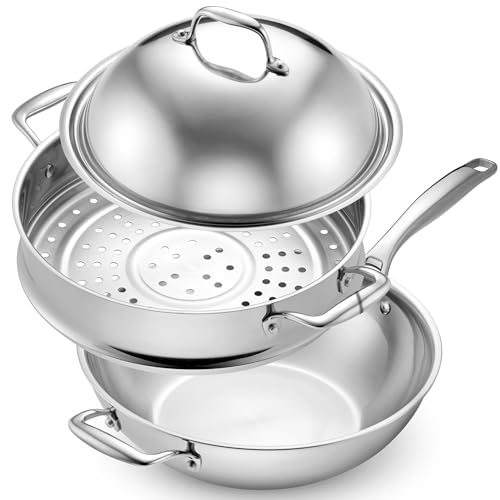
- 5-PLY FULL-CLAD STAINLESS STEEL FOR EVEN COOKING: Our 5 ply stainless steel cookware is built with five thick layers of stainless steel and aluminum from edge to edge. It retains
- NON-TOXIC COOKWARE (NO CHEMICAL COATINGS): Your food touches only pure stainless steel. This non-toxic cookware has NO CHEMICAL COATINGS, and is free of PFAS, PFOA, PTFE, or PFOS
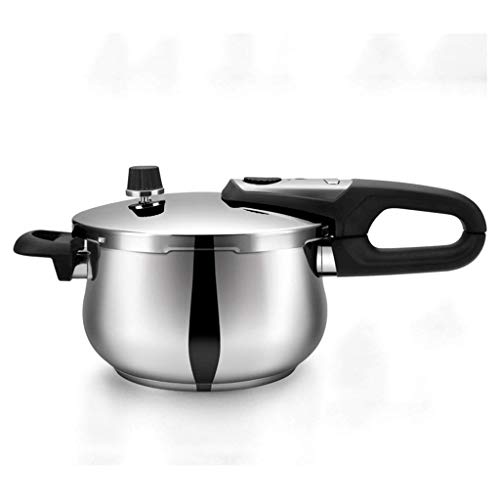
- [Safety] Pressure limiting valve, exhaust valve, safety valve, etc., safety and sealing and 304 stainless steel material, thickening the bottom of the pot to ensure the safety
- [Fast and ]: Very safe and fast cooking pot, which means your chicken, fish, meat and vegetables will cook quickly, and the completely sealed environment will seal all the taste
The Problem: Gas Heats Anything, Induction Is Fussy
A gas flame heats whatever you put over it. Induction doesn't work that way — the hob's coil creates a magnetic field and the pan itself becomes the heating element, which means the pan has to be ferromagnetic and it has to make flat, full contact with the glass. Curved bases, warped bases and non-magnetic alloys either don't heat at all or heat unevenly.
That's the whole compatibility story. Everything below is just applying it.
Step-by-Step: Audit Your Kitchen in 20 Minutes
- Get a magnet. A fridge magnet is fine. You're testing grip strength, not doing metallurgy.
- Press it to the centre of each cold pan's base. Centre matters — some pans have a magnetic ring at the edge and a dead spot in the middle.
- Sort by how hard it grabs. A firm snap means the pan will heat. A weak cling means it may work but heat slowly or trip the hob's minimum-load detection. Nothing means it's out.
- Check flatness. Lay a ruler across the base. Daylight under the middle means poor contact and slow, patchy heating.
- Check diameter. Very small pans can sit below a large hob zone's detection threshold. Move them to the smallest zone or retire them.
- Make three piles: keep, replace, and interface-disc candidates. Discs work but they add a thermal layer and throw away much of induction's responsiveness — treat them as a bridge, not a solution.
The Wok Question
A round-bottom carbon steel wok cannot work properly on a flat induction hob, because almost none of its surface touches the glass. Wok rings don't help; they lift the metal away from the coil. The realistic answer is a flat-bottomed wok with an induction-rated base, accepting that you trade some of the wall-heat behaviour a flame gives you.
Tools and Products You'll Need
These three cover the pieces most likely to fail the magnet test in a gas kitchen: the wok, and aluminium pressure vessels.
LEGEND COOKWARE 5-Ply Stainless Steel Wok Set — Best for replacing a round-bottom carbon steel wok
LEGEND COOKWARE 5-Ply Stainless Steel Wok Set is the piece most gas cooks actually need to buy, because the round-bottom wok is the one shape induction genuinely cannot accommodate. The listing describes a 12-inch, 5-quart wok built from five layers of stainless steel and aluminium running edge to edge, supplied with a lid and steamer, and states it works on induction, gas, electric and glass cooktops.
Two specifics matter for a gas convert. First, the listing rates it oven safe up to 800°F, which suggests you can start a sear on the hob and finish in the oven without changing pans — useful when induction's flat contact patch won't wrap heat up the sides the way a flame did. Second, the listing is explicit that this is polished stainless and not nonstick: preheat and add oil to prevent sticking. If you were relying on a seasoned carbon steel surface, that is a real behavioural change, not a marketing footnote.
Strengths: full-clad 5-ply construction described as heavy-gauge 18/8 stainless that resists warping under high heat; no chemical coatings, with the listing stating it is free of PFAS, PFOA, PTFE and PFOS.
Limitations: hand wash is the manufacturer's recommendation, and the no-coating design means stick-free cooking depends entirely on your preheat-and-oil technique.
Pressure Cooker 23 Quart Stainless Steel Pressure Canner (Non-Aluminum) — Best for high-volume canning on a new induction hob
If your canner is aluminium — and a great many are — it is dead weight on induction. Pressure Cooker 23 Quart Stainless Steel Pressure Canner (Non-Aluminum) is a 23.3-quart stainless replacement, and the listing spells out the base construction: a flat bottom with a multi-layer composite sandwich of SS410 outer layer, aluminium middle and SS201 inner layer, listed as usable on open fire, induction, electric and gas stoves.
That layered structure is the standard way a maker gets induction compatibility without giving up aluminium's heat spreading, and the flat bottom is what lets the hob detect it in the first place. The pot body itself is described as 201 stainless steel with a thickened, mirror-polished construction.
The manufacturer states it is tested to support up to 60KPA of pressure and claims it cuts cooking time by 70% compared to traditional pots. Read the second figure as a seller claim, not an independently verified result.
Strengths: listed safety hardware includes a rotary locking system, two safety clips, exhaust and pressure relief valves, a resilient beam, silicone ring and non-scald handle; the lid is designed for one-handed operation.
Limitations: at 23.3 quarts this is a large vessel, and its footprint may exceed a small induction zone — measure your hob's largest ring before committing.
BFGRDDW Pressure Cooker — Best for compact kitchens replacing a non-magnetic pressure pot
BFGRDDW Pressure Cooker is a compact stainless option for replacing a non-magnetic pressure cooker; its listing does not mention canning or a canner rating, so treat it as a general pressure cooker rather than a canner. The listing describes 304 stainless steel construction with a thickened pot bottom, a three-layer composite base whose intermediate layer is said to spread heat evenly and prevent scorching, and compatibility with gas, electric, induction and ceramic hobs.
Safety hardware listed includes a pressure limiting valve, exhaust valve and safety valve, with an adjustable limiting valve and a hand-operated switch. The listing positions it as a small pressure cooker suited to cozy kitchens or limited counter space.
Strengths: 304 stainless is the more common food-grade grade of the two pot bodies here; the compact framing suits a single induction zone.
Limitations: the supplied listing information does not state a capacity, a pressure rating, a warranty length, or any suitability for pressure canning — if exact volume or canning use matters to you, confirm it on the product page before ordering.
Tips for Best Results
- Drop your usual heat setting. Induction delivers power to the pan far more directly than a flame licking around it. Cooks coming off gas routinely scorch their first few dinners.
- Preheat empty pans briefly, not aggressively. Clad stainless heats fast; a long dry preheat is how you discolour it.
- Slide, don't drag. Cast iron and heavy stainless will mark glass.
- Keep one flame-free habit: stop judging heat by the look of the flame, because there isn't one. Use the numbers on the hob.
Common Mistakes to Avoid
- Binning everything. Cast iron and carbon steel are induction's best friends. Keep them.
- Buying interface discs for the whole kitchen. They sabotage the responsiveness you paid for.
- Trusting a "suitable for all hobs" claim without the magnet. Test it yourself.
- Ignoring base flatness. A pan warped by years of gas will heat badly on glass even if it's magnetic.
- Assuming a wok ring solves the wok. It doesn't; it lifts the metal out of the field.
How We Research
This website does not do product research. For this guide, each product was assessed from its Amazon Creators API verified product record and its published listing feature bullets, retrieved 2026-09-06, and every specification quoted above is traced back to that product's own record. Where a listing does not state something — a capacity, a warranty, a rating — we say so rather than estimate it.
Related Resources
- Induction cookware buying guide
- Carbon steel wok care and seasoning
- The CPSC publishes recall notices for consumer products, including cookware and pressure vessels: CPSC
- USA.gov maintains consumer protection guidance for handling faulty products and complaints: USA.gov consumer protection
Frequently Asked Questions
Will my aluminium and copper pans work on induction? Not on their own — neither metal is ferromagnetic. Some aluminium and copper pans are built with a bonded magnetic disc in the base, which is why the magnet test beats guessing from the metal you can see.
Can I use a wok on an induction cooktop? Only a flat-bottomed one. A round-bottom wok contacts too little of the glass to heat properly, and a wok ring makes it worse by increasing the gap.
Are interface discs a real solution? They're a stopgap. The disc heats and then conducts into the pan, which reintroduces the thermal lag induction exists to eliminate.
Is stainless steel always induction compatible? No. Many stainless alloys are non-magnetic. Compatible stainless cookware typically uses a magnetic outer layer or bonded base — the 23-quart canner above, for instance, lists an SS410 outer layer over an aluminium core.
Does induction change how pressure cookers behave? The pot still needs a magnetic, flat base to work at all. Both pressure cookers here list induction among their supported hob types.
Should I keep my cast iron? Yes. Just lift it rather than sliding it, since the cooking surface is glass now.
Final Verdict
Budget for replacements, not a rebuild. For most people switching from gas, the shopping list is a flat-bottomed wok and any aluminium pressure vessel.
On the wok, the LEGEND COOKWARE 5-Ply Stainless Steel Wok Set is the pick here on the strength of its stated 5-ply full-clad construction and an explicit induction listing, suiting the cook who wants one pan that also goes in the oven to 800°F — provided you accept polished stainless rather than a seasoned nonstick surface. If you can and preserve at volume, the 23-quart stainless canner is the direct non-aluminium swap. If counter space is tight and you need everyday pressure cooking rather than canning, the BFGRDDW Pressure Cooker is listed as a small pressure cooker for limited counter space, though its listing leaves capacity, pressure rating and any canning suitability unstated.
Sources & Methodology
Nobody at this website physically or laboratory-tested these pots and pans; there is no kitchen bench behind this page. What was done is a close read of each item's Amazon Creators API verified product record and its published listing feature bullets, retrieved 2026-09-06, with particular attention to base construction — the single detail that determines whether a pan works on induction at all. Because base layering and hob compatibility are things manufacturers state explicitly rather than qualities that require use to detect, listing evidence answers the compatibility question for this category well; it cannot tell you how any of these pieces will feel or hold up after years of cooking.